Halloween Tumbler Cold Cup 24 Oz
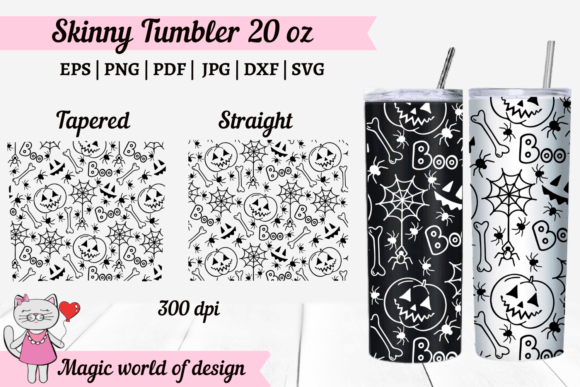
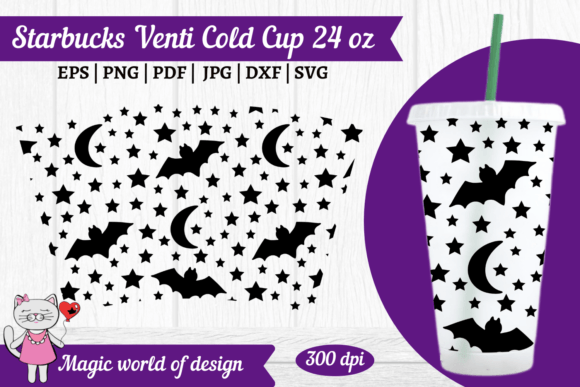
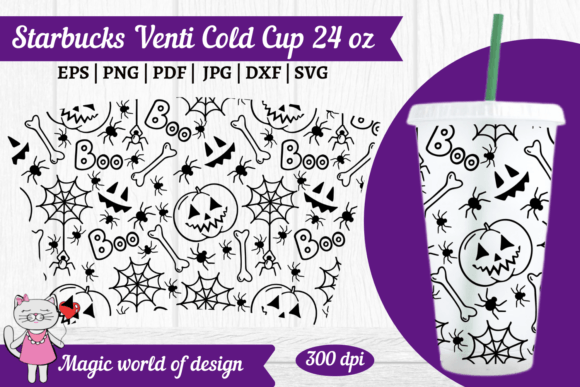
When I first opened the Halloween Tumbler Cold Cup 24 Oz file set, I felt that immediate spark of seasonal possibility. The design carries a playful yet slightly moody Halloween energy that feels right for the kind of custom products people actually want to buy, not just the overly cutesy stuff that floods craft fairs every October. What struck me first was the composition. The artwork is clearly built with the tumbler wrap format in mind, pre-sized and ready to fit the Starbucks Venti Cold Cup 24 oz, which means the layout already respects the curved surface and the visual real estate of a tall cup. That kind of intentional sizing tells me the designer understands how a graphic needs to behave on a three-dimensional object, and that instinct translates well when you start thinking about other custom product applications.
Now, I need to be upfront about something important. The Halloween Tumbler Cold Cup 24 Oz is a graphics package. You get SVG, PNG, EPS, DXF, PDF, and JPEG files. These are pre-sized cutting files and printable design assets, not pre-digitized machine embroidery design files. If you are an embroidery designer, a craft business owner, or an Etsy seller who works primarily with thread and needle, you will need to either digitize this artwork yourself or work with a digitizer to convert it into a stitch-ready embroidery file. I want to make that clear because I have seen too many makers download a beautiful graphic and assume it will load straight into their embroidery machine. It will not. But that does not mean this design is not valuable to the embroidery community. Quite the opposite. A strong graphic file is the foundation of a great embroidery project, and the Halloween Tumbler Cold Cup 24 Oz delivers a solid foundation.
A Design That Reads Well at First Glance
The mood of this artwork leans into the Halloween aesthetic without becoming too niche or too frightening for a broad customer base. The shapes are bold enough to translate well into filled stitch areas, and the overall visual weight distributes nicely across the horizontal wrap format. When I look at a graphic through the lens of embroidery, I am always scanning for trouble spots. Thin lines that might disappear under thread, tiny details that would blur together in satin stitch, overly complex gradients that digitizing software struggles to interpret, and lettering so small it would require a level of precision that most single-needle machines cannot reliably deliver. The Halloween Tumbler Cold Cup 24 Oz handles most of these concerns well. The design uses clear, defined shapes that would map cleanly to fill stitch regions, and the thematic elements feel intentional rather than cluttered.
I could immediately picture this artwork on a range of finished products. A custom embroidered tote bag for a Halloween boutique pop-up. A sweatshirt with a spooky seasonal motif that customers would wear throughout October. An apron for a baker who goes all out for fall holidays. The design has enough personality to stand alone but also enough restraint to work as part of a larger product line. That is a balance I always look for when evaluating whether a design asset is worth the time investment of digitizing.
Where This Design Would Shine in Embroidery Projects
Let me walk through a real scenario. I have a small shop client who runs a seasonal merchandise line. Every October, she releases a limited collection of embroidered sweatshirts, canvas tote bags, and kitchen towels with Halloween themes. She needs designs that stitch out cleanly, read well from a distance, and feel cohesive as a collection. When I reviewed the Halloween Tumbler Cold Cup 24 Oz, I immediately thought of her. The artwork would digitize into a striking embroidery file for the back of a crewneck sweatshirt, especially if scaled up slightly and paired with a high-contrast thread palette. On a natural canvas tote bag, the design would bring that handmade boutique feel that commands a higher price point at craft fairs. On a kitchen towel, it would add a seasonal touch without being so dense that it stiffens the fabric and ruins the towel's functionality.
For personalized gifts, this design opens up interesting possibilities. Imagine a trick-or-treat tote with a child's name added alongside the tumbler artwork. Or a set of embroidered pillow covers for a Halloween-themed guest room. The layout of the design, being horizontal and wrap-oriented, also makes it a strong candidate for hat embroidery, particularly on structured caps where the curved front panel benefits from designs that follow the natural arc. You would need to test the scaling carefully, but the visual rhythm of the artwork suggests it would adapt well.
Digitizing Considerations That Matter
If you are planning to convert the Halloween Tumbler Cold Cup 24 Oz into a machine embroidery design, there are several practical factors you should address before you commit to a full production run. First, test the digitized version on scrap fabric that matches your intended final material. A design that stitches beautifully on cotton broadcloth may pucker horribly on a stretchy sweatshirt fleece or a loosely woven canvas. Use the right stabilizer for the fabric weight and texture. I cannot stress this enough. A great graphic file can be ruined by poor stabilization choices, and your customers will notice the difference between a crisp, professional finish and a wavy, distorted result.
Thread color selection is another area where this design deserves thoughtful attention. The Halloween Tumbler Cold Cup 24 Oz likely uses a palette that works well in print or on screen, but embroidery thread behaves differently. Light reflects off the thread surface, so colors that look saturated in a digital mockup can appear muted or flat when stitched. Test your thread choices on both light and dark fabric backgrounds. I have seen designs lose their impact entirely because the thread colors blended too closely with the fabric. If you are selling finished products, your customers are buying the visual impact, and thread contrast is a huge part of that equation.
Stitch density is another concern. When you digitize from a graphic file, the software may default to densities that are too heavy for certain fabric types. Overly dense embroidery on a thin t-shirt creates a stiff, uncomfortable patch that puckers after the first wash. On a tote bag, some density is fine, but you still need to avoid buildup in areas where the design has overlapping elements. Check the small details in the artwork carefully. If there are tiny eyes, narrow outlines, or delicate decorative accents, those may need to be simplified or enlarged slightly to read clearly in thread. What looks sharp as a printed graphic can become muddy as an embroidery file if the details are too fine for the needle to resolve.
The Commercial Use Perspective
For Etsy sellers, craft business owners, and handmade shop operators, the value of a design asset like Halloween Tumbler Cold Cup 24 Oz depends heavily on its versatility and the licensing terms attached to it. The file bundle includes multiple formats. SVG, EPS, and DXF are ideal for further editing and scaling. PNG and JPEG are useful for mockups, digital product previews, and printable applications. PDF gives you a reliable reference for layout. This range of formats means you can use the artwork for more than just embroidery. You could create coordinating product lines where some items are embroidered and others use the same graphic printed on heat transfer vinyl or sublimation blanks. A cohesive brand look across different product types strengthens your shop's visual identity and builds customer trust.
Before you sell any finished products featuring this design, confirm the licensing terms. The description states this is an instant download for crafting use, but you need to verify whether commercial use is permitted, whether there are restrictions on the number of finished items you can sell, and whether you can use the design on products you manufacture for wholesale or retail. I always recommend keeping a record of the license terms for every design asset you use in your business. If a customer asks about the design origin, or if a platform like Etsy requests verification of your commercial rights, you want that documentation readily available.
Where Caution Is Warranted
I would be cautious about using this design on very small hoop sizes without significant simplification. The horizontal wrap format means the artwork is naturally wider than it is tall. If you try to squeeze it into a compact embroidery area, you risk losing the proportions that make the design appealing in the first place. Test the scaled version thoroughly before committing to a product. On textured fabrics like terry cloth or heavily napped fleece, the fine details may become obscured. Consider using a water-soluble topping to keep the stitches sitting cleanly on the surface rather than sinking into the fabric pile.
For caps, the curved surface presents a challenge for any horizontally oriented design. The Halloween Tumbler Cold Cup 24 Oz, with its wrap-friendly layout, may need to be split or repositioned to follow the cap's contour properly. Do not assume the design will stitch out perfectly on a hat just because it looks good on a flat hoop test. Curved surfaces change how the embroidery reads, and customers who wear caps will see the design from various angles throughout the day. Test it on an actual cap, using the proper cap hoop and backing, before you offer it as a product option.
Products that require frequent washing, such as baby items, kitchen towels, or everyday apparel, need extra attention to stitch security. Make sure the digitized version locks stitches properly at the start and end of each segment. Loose thread ends or poorly secured satin stitch edges will fray after repeated laundering, and that kind of quality issue can damage your reputation as a handmade seller. The graphic file itself is not the weak point here. The digitizing and production process are where the quality control happens.
Bringing It All Together for a Real Project
Let me return to that small shop client I mentioned earlier. After reviewing the Halloween Tumbler Cold Cup 24 Oz, I would recommend she use it as the anchor design for a seasonal tote bag collection. I would digitize the artwork at a size that fills roughly sixty percent of the front panel of a standard canvas tote, keeping the stitch density moderate so the bag remains soft and functional. Thread colors would lean toward warm oranges, deep purples, charcoal grays, and a touch of bright white for contrast. The tote bags would photograph beautifully for Etsy listings, especially styled with autumn props and natural lighting. The same design, scaled down and simplified slightly, could work on a coordinating zipper pouch or a set of cloth napkins for Halloween gatherings. The customer who buys the tote bag might return for the matching accessories, and that is exactly how a smart product line grows.
For the embroidery designer who is evaluating whether to invest time in digitizing this artwork, my advice is practical. The Halloween Tumbler Cold Cup 24 Oz is a well-composed graphic design that offers genuine seasonal appeal. It is not a machine embroidery design file, so you will need to do the digitizing work or hire a professional digitizer. If you are comfortable with that process, the design has strong commercial potential across a range of finished products. The format variety, the clear pre-sizing for a popular tumbler model, and the thematic cohesion all point to a design asset created by someone who understands the crafting market. Test it on scrap fabric, confirm your licensing, choose your thread colors carefully, and you will likely be pleased with the results on your embroidery projects, your boutique products, and your seasonal gift lineup.