3D Leopard Seamless Pattern Tumbler Wrap for Crafts Graphics
When a fresh graphics asset lands in my workflow, I do not just glance at the preview and list it. I test it across mockups, check how it behaves under different product formats, and ask one question repeatedly: will this help a seller make money? The 3D Leopard Seamless Pattern Tumbler Wrap arrived in my digital workspace last week, and I have spent several days running it through the kind of product testing any serious Etsy seller, print-on-demand shop owner, or Cricut crafter would recognize.
What I am sharing here is not a surface-level impression. I want to walk through the real-world potential of this design asset, where it shines, where it needs caution, and how a creative entrepreneur can fold it into a sellable product line without wasted time or missteps.
First Look at the Leopard Pattern and Its Visual Personality
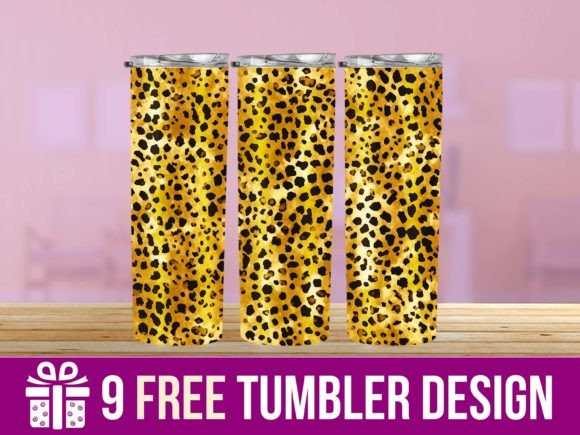
Opening the file, the first thing that struck me was the texture depth. The 3D rendering gives the leopard spots a raised, almost tactile quality that flat vector patterns rarely achieve. The rosettes are not simply printed on; they appear to sit on the surface with subtle shadows and highlights that mimic embossed leather or dimensional vinyl. This is important because perceived texture drives perceived value in digital downloads. When a customer scrolls through tumbler wrap listings, the ones with believable depth stop the scroll.
The mood of this seamless pattern sits somewhere between bold statement and wearable luxury. It leans feminine but not overly soft, wild but not juvenile. I can see this appealing to a buyer who wants animal print with a polished, modern edge rather than a costume feel. The color palette in the version I tested used warm neutral tones with deep brown and black spotting, which makes it versatile across seasonal collections and evergreen product lines.
For a crafts graphics seller, this kind of visual personality opens doors to multiple niches: boho tumbler designs, western-inspired merchandise, festival accessory graphics, and even elevated everyday drinkware that feels premium without being loud.
Testing the Seamless Repeat Across Product Formats
Seamless patterns live or die by their repeat quality. I tiled this design across a 20oz skinny straight tumbler template and rotated it to check for visible seams, awkward breaks, or mismatched edges. The repeat held cleanly. The wrap wrapped smoothly around the curved surface in my digital mockup, and the pattern did not distort at the top or bottom trim lines. For a 3D tumbler wrap PNG marketed specifically for straight tumblers, this alignment is non-negotiable, and the file delivered.
Beyond tumblers, I dropped the pattern into a few other product templates I keep for testing. On a mug design, the scale felt appropriate without needing adjustment. On a tote bag print, the leopard spots created an eye-catching all-over pattern that worked well with a centered monogram overlay. I even tested it as a background for a Canva template, and the seamless nature meant I could stretch it across any canvas size without pixelation or obvious repetition.
How This Asset Fits a Real Product Collection
I want to paint a realistic scenario. Imagine you are building a print-on-demand shop around statement drinkware. You have a few floral wraps, a couple of geometric designs, and some seasonal holiday patterns. What you are missing is an animal print that can anchor a year-round wild elegance collection. The 3D Leopard Seamless Pattern Tumbler Wrap fills that slot immediately.
One seller I know runs a small Etsy store specializing in personalized tumblers. She pairs each pattern with custom name text in a matching script font, offers three background color variations, and bundles them into a digital download set. This leopard pattern would fit that model perfectly. The dimensional look means she can charge a slight premium over flat-print competitors, and the seamless repeat means she can offer it in multiple tumbler sizes without redesigning anything.
For a digital product creator selling on Creative Fabrica or Design Bundles, this asset can be packaged into a larger animal print collection. Pair it with a zebra pattern, a snakeskin texture, and a cheetah variant, and you have a commercial graphics bundle that appeals to a wide swath of small business owners making everything from sublimation shirts to planner stickers.
Where the 3D Leopard Tumbler Wrap Performs Best
After testing across dozens of mockup scenarios, I can confidently point to several product categories where this design asset excels:
- Tumbler wraps and drinkware: The primary intended use, and it delivers. The 20oz skinny straight tumbler format is the sweet spot, but the pattern scales well for larger cups and even water bottles.
- Full-coverage sublimation designs: The rich texture and seamless repeat make it ideal for all-over sublimation on polyester shirts, tote bags, and pillow covers.
- Digital paper packs: Cropped into squares, this pattern creates a striking scrapbooking paper that crafters would use for junk journals, card making, and mixed media projects.
- Social media templates and promotional visuals: As a background layer with reduced opacity, the leopard texture adds visual interest without overwhelming text or product photos.
- Canva template elements: Uploaded as a pattern fill, designers can apply it to shapes, frames, and text masks for cohesive brand kits.
In each of these applications, the 3D effect remains visible and adds a layer of sophistication that flat leopard prints simply lack. The pattern does the heavy lifting of making a product look designed rather than assembled.
Watching Out for Risky Applications
No graphics asset works everywhere, and honest testing means acknowledging the weak spots. I found several scenarios where the 3D Leopard Seamless Pattern Tumbler Wrap needs careful handling or should be avoided entirely.
First, tiny sticker designs lose the 3D detail. When I shrunk the pattern to fit a 2-inch sticker circle, the dimensional shadows became muddy and the rosettes blurred together. The texture relies on viewing at a reasonable scale, so if your product line centers on small die-cut stickers or mini labels, this is not the right asset.
Second, text-heavy templates can fight with the pattern. The leopard spots have high contrast in places, and when I layered body text directly on top without a solid background panel, readability suffered. This is fixable with a semi-transparent overlay, but crafters using Cricut or Silhouette machines for vinyl projects should be aware that intricate cut lines around tiny text might not play well with the busy pattern.
Third, dark background products can swallow the 3D shadowing. The illusion of depth relies on light and shadow contrast, and on a black or charcoal substrate, the effect flattens noticeably. I recommend testing on mid-tone or lighter surfaces for the best dimensional result.
Finally, for anyone creating SVG cut files from this pattern, be prepared for complex cut paths. The organic, irregular rosettes create many nodes, which can slow down cutting machines or lead to weeding frustrations. I would not recommend this as a cut-file base unless you simplify the shapes significantly.
Practical Tips for Listing and Selling This Design
Before you publish a product listing using this 3D leopard pattern, run through a short checklist that I have developed from years of marketplace selling. These steps separate a professional presentation from a rushed upload.
Start by testing the design on real product mockups. A tumbler wrap looks different on a curved 3D render than it does on a flat PNG preview. Customers make purchase decisions based on mockup images, so invest time in creating clean, well-lit previews that show the dimensional texture clearly. I use mockup templates that let me rotate the tumbler angle and adjust lighting to highlight the 3D effect.
Check how the thumbnail appears at small marketplace sizes. On Etsy, your listing image gets compressed into a tiny square in search results. The leopard pattern should still read as a recognizable animal print at that size. If the rosettes blur into a muddy brown blob, you may need to zoom in on a detail section for the primary thumbnail rather than showing the full wrap.
Test the pattern on both white and dark backgrounds. Even if you sell the design as a transparent PNG, your customers will place it on various substrates. Seeing how it behaves on light and dark surfaces helps you write accurate product descriptions and set proper expectations.
Verify file resolution and transparency before packaging. A 3D tumbler wrap PNG should be at least 300 DPI at the full wrap dimensions for a 20oz skinny straight tumbler. Check that the background is truly transparent with no stray pixels around the edges. Print-on-demand platforms will reject files with unexpected backgrounds, and customer refund requests eat into profit margins quickly.
Organize the download files clearly. If you bundle multiple sizes or color variations, label each file descriptively. A folder structure that separates the seamless pattern tile from the pre-sized tumbler wrap saves your customers time and reduces confusion. Consider including a simple PDF guide with recommended print settings and compatible tumbler models.
Pairing the Leopard Pattern with Fonts and Design Elements
One of the most profitable ways to use this asset is to combine it with complementary typography and create coordinated product sets. Through testing, I found several font pairings that elevate the leopard pattern into a cohesive design system.
A bold serif font in white or gold creates a high-end boutique label feel. This pairing works beautifully for tumbler wraps where a name or monogram sits centered on the leopard background. The contrast between structured serif letterforms and organic animal spots creates visual tension that feels intentional and premium.
A flowing script font softens the wild pattern and pushes it toward a romantic, feminine aesthetic. I tested this on a mockup for a bridesmaid tumbler, and the result looked like something that could sell for a higher price point in a wedding-themed collection.
For a modern minimalist look, a clean sans serif in all caps with generous letter spacing balances the pattern's complexity. This approach works well for social media graphics, blog headers, and promotional materials where the message needs to stay clear against a decorative background.
A handwritten or brush font gives the design a handmade, craft-market feel that resonates with Cricut users and small-batch creators. I can see this combination on tote bags, framed prints, and market stall signage.
Licensing and Commercial Use Considerations
Before selling any finished product that incorporates this 3D leopard pattern, confirm the commercial license terms. Most digital graphics assets come with specific allowances for print-on-demand, physical product sales, and digital redistribution. Read the license carefully. Some creators allow unlimited physical product sales but restrict reselling the pattern as a standalone digital file. Others require attribution or have quantity limits on print runs.
For Etsy sellers and creative marketplace shop owners, commercial licensing clarity protects your business from takedown notices and legal headaches. If the license permits, I recommend noting in your product description that your design uses legally licensed graphics, as this builds trust with cautious buyers who have seen too many shops disappear overnight due to copyright issues.
Final Assessment for Digital Product Creators
After a thorough testing cycle, the 3D Leopard Seamless Pattern Tumbler Wrap earns a solid place in my recommended assets list. The dimensional texture separates it from the flood of flat animal prints saturating the crafts graphics market. The seamless repeat holds up under real product conditions, and the visual personality suits multiple niches without boxing itself into a single season or trend.
For the seller preparing a new product collection, this design offers a clear path to differentiation. While competitors upload flat leopard patterns, you can position products with this 3D wrap as a premium tier. The mockup images will look more polished, the perceived value will be higher, and the customer experience will feel more luxurious.
Test it on your own mockups, check the repeat at your specific product dimensions, experiment with font pairings that match your brand voice, and verify your commercial license before hitting publish. Do those things, and this leopard pattern can become a quiet profit driver in your digital product catalog, whether you sell on Etsy, Creative Fabrica, Shopify, or your own website.