3D Corn Tumbler Wrap Designs
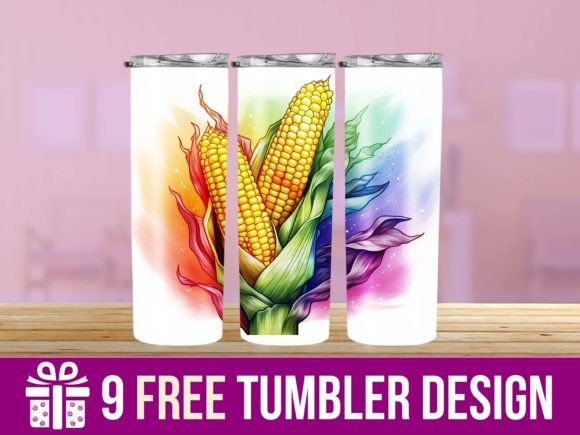
When I first opened the file for 3D Corn Tumbler Wrap Designs, I wasn’t thinking about tumblers at all. I was picturing stitches. The graphic has that warm, sunlit farm-stand personality—plump kernels, layered husks, and a dimensional quality that practically begs to be turned into a textured embroidery piece. As a designer who lives in the world of thread and stabilizer, I immediately started evaluating how this digital asset would translate from a flat PNG into a stitched project that someone would actually buy, wear, or gift. The mood is playful but grounded, a little rustic, and undeniably cheerful. It’s the kind of design that makes you think of summer barbecues, farmers’ market totes, and kitchen towels hanging by a sunny window. The visual personality is bold without being loud, and the 3D effect gives it a drawn, almost sculpted feel. That’s where the embroidery potential gets interesting.
First Impressions and the Mood It Creates
The 3D corn wrap design doesn’t try to be photorealistic, and that’s a good thing for embroidery. It leans into a stylized, slightly illustrated look with clear contours and a defined color palette. The kernels are arranged in a way that suggests depth, with highlights and shadows that a digitizer could interpret through varying stitch angles and densities. That dimensional quality is what makes the machine embroidery design conversion so promising. You can already see how a mix of satin stitch for the husk edges and fill stitch for the cob body would bring that 3D effect to life. The mood is nostalgic but fresh—it feels like a design that would stop a customer scrolling through an Etsy shop. I can imagine it on a cream-colored canvas tote, the yellow and green threads popping against a natural fabric texture. It’s not just a graphic; it’s a storytelling piece.
A Real-Life Stitching Scenario: A Custom Farmhouse Tote
Let’s say I’m preparing a batch of custom embroidered tote bags for a local farm stand. The owner wants something that feels handmade, organic, and instantly recognizable. I’d pull up the 3D Corn Tumbler Wrap Designs file and start mentally mapping out the embroidery. The original graphic is sized for a 20oz skinny straight tumbler, so the proportions are tall and narrow. That actually works beautifully for a vertical placement on the side of a tote bag, or even along the front of an apron. I’d digitize the corn with a sturdy underlay, using a slightly heavier fill stitch for the kernels to give them that rounded, popped-out look, and a lighter satin stitch for the husk layers to keep them in the background. The scenario feels real because I’ve done this before—converting a digital graphic into a handmade product that needs to withstand washing, folding, and daily use. The design has enough detail to feel special, but not so much that it becomes a stitch-count nightmare.
Where This Design Shines in Embroidery
Not every graphic is a good embroidery candidate, but this one has a lot going for it. The corn motif is universally likeable, making it a strong choice for personalized gift projects, holiday embroidery (think Thanksgiving or harvest-themed decor), and small shop product lines. I’d use it on:
- Custom apparel like sweatshirts and t-shirts, where the 3D effect adds a premium, tactile element.
- Tote bags and market bags—the vertical layout fits perfectly along the side or center.
- Kitchen towels and tea towels, where the design’s warm, food-related charm makes sense.
- Aprons for a boutique or gift shop, especially if you pair it with a small embroidered text.
- Patches—digitized with a tight border, this could be an excellent embroidered patch for jackets or caps.
- Nursery decor or kids’ clothing, if you soften the colors a bit, for a playful farm theme.
In each of these products, the design’s clear shapes and limited color zones help keep the stitch density manageable. The visual recognition is instant—customers see the corn and immediately connect it to food, harvest, nature, or simple country living. That kind of emotional hook is gold for a craft business or Etsy seller trying to build a cohesive brand.
Fabrics and Surfaces That Demand Extra Caution
Now, I’m not going to pretend this design is bombproof. As a stitched piece, the 3D corn will have areas of dense fill, and that means some fabrics just aren’t a good match. Thin, stretchy fabrics like lightweight jersey or ribbed knit can pucker under the weight of heavy stitching. If you’re set on using it for baby embroidery onesies, you’ll need to simplify the fill and use a soft cut-away stabilizer—and even then, test thoroughly. The small details, like the fine lines that separate kernels, could close up if the stitch density is too high or the thread is too thick. I’d avoid using this design on very dark fabrics without first testing the thread color contrast; the yellows and greens can lose their dimension against a black background unless you outline them carefully. Curved surfaces, such as caps, are tricky because the long, vertical layout might distort around the crown. A left-chest placement on a polo shirt works better than a full cap wrap. And anything that gets washed frequently, like a kitchen towel, needs a properly digitized satin-edge finish to prevent fraying. I’d also warn against using this on a small hoop size—the design needs breathing room to keep the kernel details crisp.
How This Design Elevates a Handmade Product
There’s a difference between a design that looks pretty and one that actually adds value to a finished product. The 3D Corn Tumbler Wrap Designs graphic has the kind of visual appeal that can make a simple tea towel feel like a boutique item. When you stitch something that has depth and texture, customers perceive it as higher quality. They’re more likely to trust the product, more likely to gift it, and more likely to come back. The 3D effect, even when translated into thread, gives a handmade product a professional, thoughtful edge. I’ve seen similar designs increase buyer engagement on Etsy listings because the textured look stands out in a printable mockup or on a lifestyle photo. If you’re building a brand around farmhouse, country, or cottagecore aesthetics, this corn motif becomes a signature piece that reinforces brand consistency across your product line. It’s not just a decoration; it’s a trust signal.
Practical Tips for Embroidery Designers Before You Stitch
I never review a digital graphic without running through my mental checklist. Here’s what I’d do before stitching out the 3D Corn Tumbler Wrap Designs for a client or to sell:
- Test on scrap fabric—always. Use a similar weight and texture to your final product.
- Check thread color contrast against at least two fabric backgrounds: light and dark. The yellow kernels can wash out on beige or blend into a dark brown.
- Review stitch density in your digitizing software. The 3D effect shouldn’t come at the cost of a stiff, bulletproof patch of stitches.
- Confirm hoop size—the original graphic is long, so you’ll likely need at least a 5x7 hoop, maybe larger, to avoid micro-lettering-level detail loss.
- Inspect small details like the husk lines. If they’re too thin in the PNG, they might disappear as stitches. You may need to thicken them slightly.
- Test in black and white to see if the design still reads well. Good contrast is key for an embroidered piece.
- Use proper stabilizer—for tote bags, a medium cut-away; for towels, a tear-away with a water-soluble topping to keep the stitches from sinking in.
- Check commercial licensing carefully. The description doesn’t spell out the terms, so you need to confirm whether you can sell finished items with this design, or if it’s only for personal use. Never assume.
From Digital Download to Finished Embroidery: What to Expect
This is a Graphics asset in the Crafts category, delivered as a digital download PNG. That means it’s not a stitch-ready embroidery file. You’ll need to digitize it yourself or hire a digitizer. The 3D shading in the original artwork will require careful pathing to replicate the dimensional look with thread. Expect to use a few shades of yellow, a couple of greens, and maybe a pale cream for the kernel highlights. The design doesn’t include tiny lettering, which is a relief—text can be a headache on textured fabrics. The overall shape is clean, so you can easily adapt it for a tote bag design, a sweatshirt embroidery centerpiece, or a custom apparel accent. The fact that it’s a PNG also means you can use it for printable mockup previews, which helps market your finished embroidered products before you even stitch a single piece. I’d use the graphic to create a digital preview on a towel or bag, see how it sits, and then digitize accordingly. It’s a practical workflow that saves time and lets you gauge customer interest before committing to a full embroidery run.
If you’re a maker who loves turning a cheerful, farm-inspired graphic into a tangible, stitched product, the 3D Corn Tumbler Wrap Designs file is worth the conversation. It’s not a plug-and-play digital embroidery file—but with the right digitizing decisions, it can become a standout piece in your craft business. The design has personality, seasonal relevance, and a shape that fits a surprising number of embroidery project ideas. Just remember to test, adjust, and always look at it through the eyes of the person who will eventually hold the finished product. That’s the perspective that turns a simple graphic into a bestseller.